

In many workplaces, feedback is either avoided because people fear uncomfortable conversations or delivered so poorly that employees become defensive.
Both approaches prevent improvement.
Effective feedback is not about proving someone wrong. It is about helping someone see what they can do better.
Consider the difference between saying, “You are careless with your work,” and saying, “The last two reports contained errors in the financial figures. Let's understand what caused them and how we can prevent this next time.”
The first statement judges the person. The second addresses observable behaviour and opens a conversation about improvement.
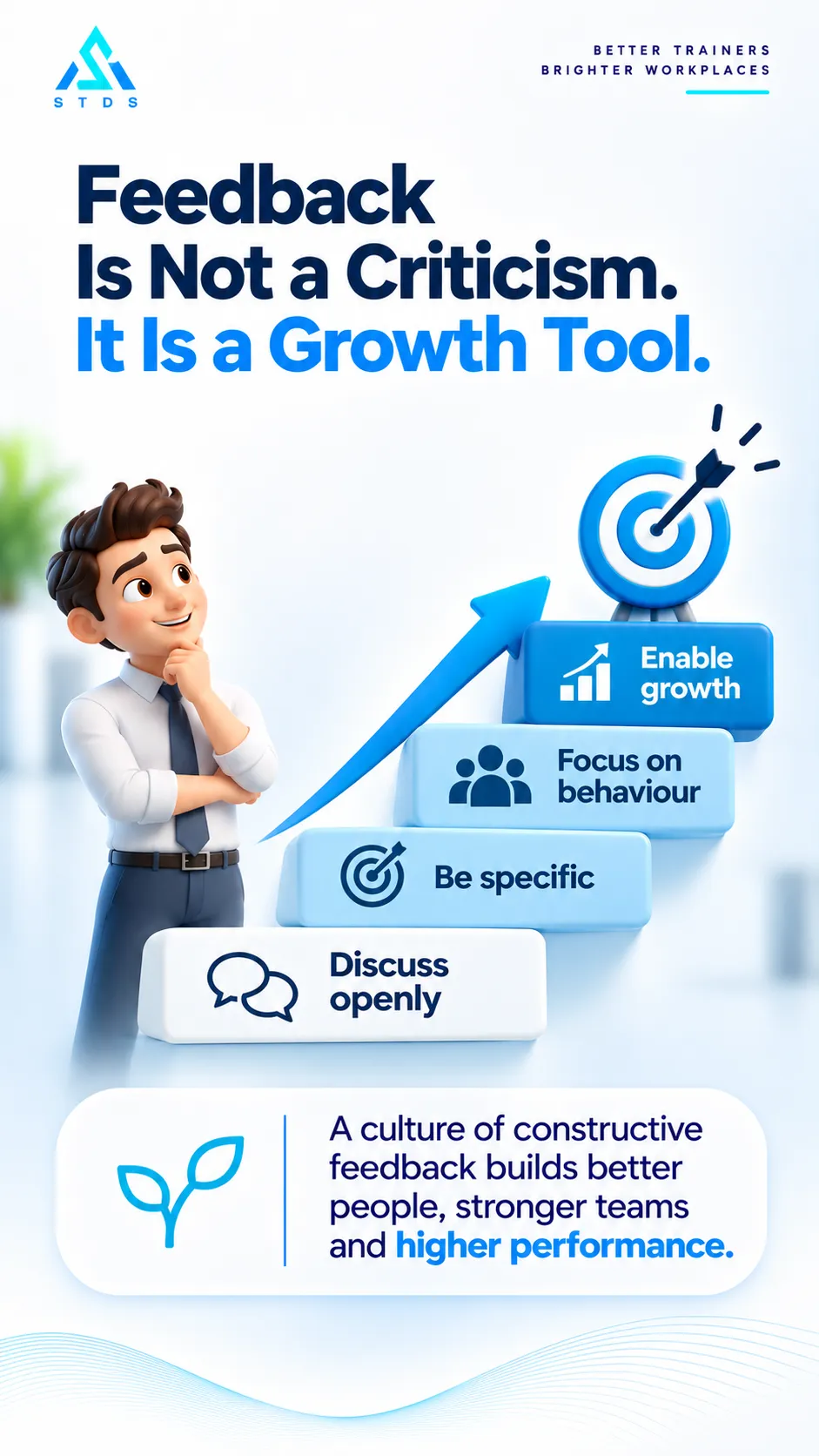
This is the foundation of constructive feedback: focus on specific actions, explain their impact and discuss what can change.
Managers who create a culture of continuous feedback don't wait for annual appraisals to address performance. They make improvement part of everyday work.
Good feedback protects dignity while challenging behaviour.
Comments 0
Sign in to like, save or comment.
No comments yet. Start the discussion.